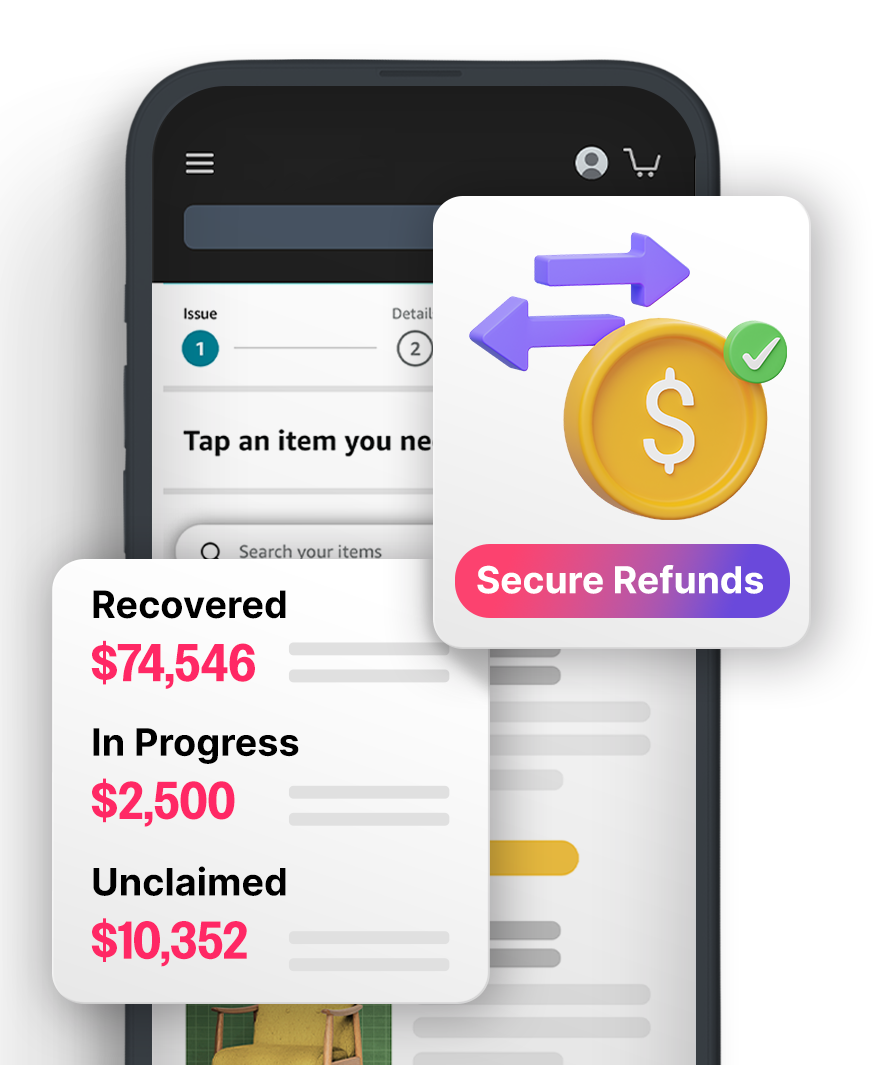
Find and document eligible inventory discrepancies with a consistent reconciliation process.
Compare shipments, returns, fees and account records, then prepare evidence for eligible claims within platform timelines.
Returned items don’t always make it back into sellable inventory.
Some are marked as refunded but never returned, others are damaged
and never reimbursed, and some simply disappear in the process.
This creates gaps where you lose both the product and the revenue.
Proper FBA reimbursement requires matching return data with
inventory records and confirming whether Amazon issued the correct
outcome. We identify these mismatches and submit claims where
refunds were issued incorrectly or inventory was not properly
accounted for.
A customer returns an item, but Amazon
marks it as refunded without properly returning it to inventory or
accounting for its condition. The result is a double loss: the
product value is gone, and no corresponding adjustment is made to
your account. This often happens when return status updates don’t
align with actual warehouse processing. To address this, we
reconcile return data against inventory and order records to
identify these gaps and file claims to recover the missing product
value and associated revenue through amazon fba refund
reimbursement.
FBA fees are not always calculated correctly. Dimensional weight
errors, incorrect product measurements, and misclassified
categories can lead to ongoing overcharges on every order. These
errors compound quickly, especially at scale. Recovering these
costs requires auditing fee reports and submitting claims for a
fees refund where discrepancies exist. We analyze your fee
structure, isolate overcharges, and file reimbursement claims to
recover what has already been taken while helping prevent repeat
errors.
Fee data often shows small inconsistencies that
go unnoticed at scale, such as incorrect dimensional weight,
misclassified storage tiers, or repeated overcharges across
multiple SKUs. The insight most sellers miss is that these are not
one-off errors, they compound over time and directly reduce
margin. The implication is ongoing leakage in profitability that
is rarely caught through standard reporting. We audit fee
breakdowns at the transaction level, isolate discrepancies, and
submit claims to recover overcharges through Amazon FBA fees
refund processes.
Amazon enforces strict time limits on when claims can be filed.
Once that window closes, the money is no longer recoverable. Most
sellers miss these deadlines because the issues are not caught
early enough or tracked consistently. Lost inventory, return
errors, and fee discrepancies all have different claim windows.
Our process ensures every issue is identified within the allowable
timeframe, submitted correctly, and followed through to resolution
so eligible reimbursements are not lost due to timing.
Most
sellers don’t realize that reimbursement eligibility is
time-bound, and once the window closes, even valid claims are
permanently lost. The pain is not just missed money, but the
silent accumulation of unclaimed losses over months or years. This
gets worse at scale because issues are only discovered after they
are already expired. Our teams
continuously monitor account activity,
flag issues early, and submit claims within allowable
timeframes
so recoverable revenue is not lost due to missed deadlines.
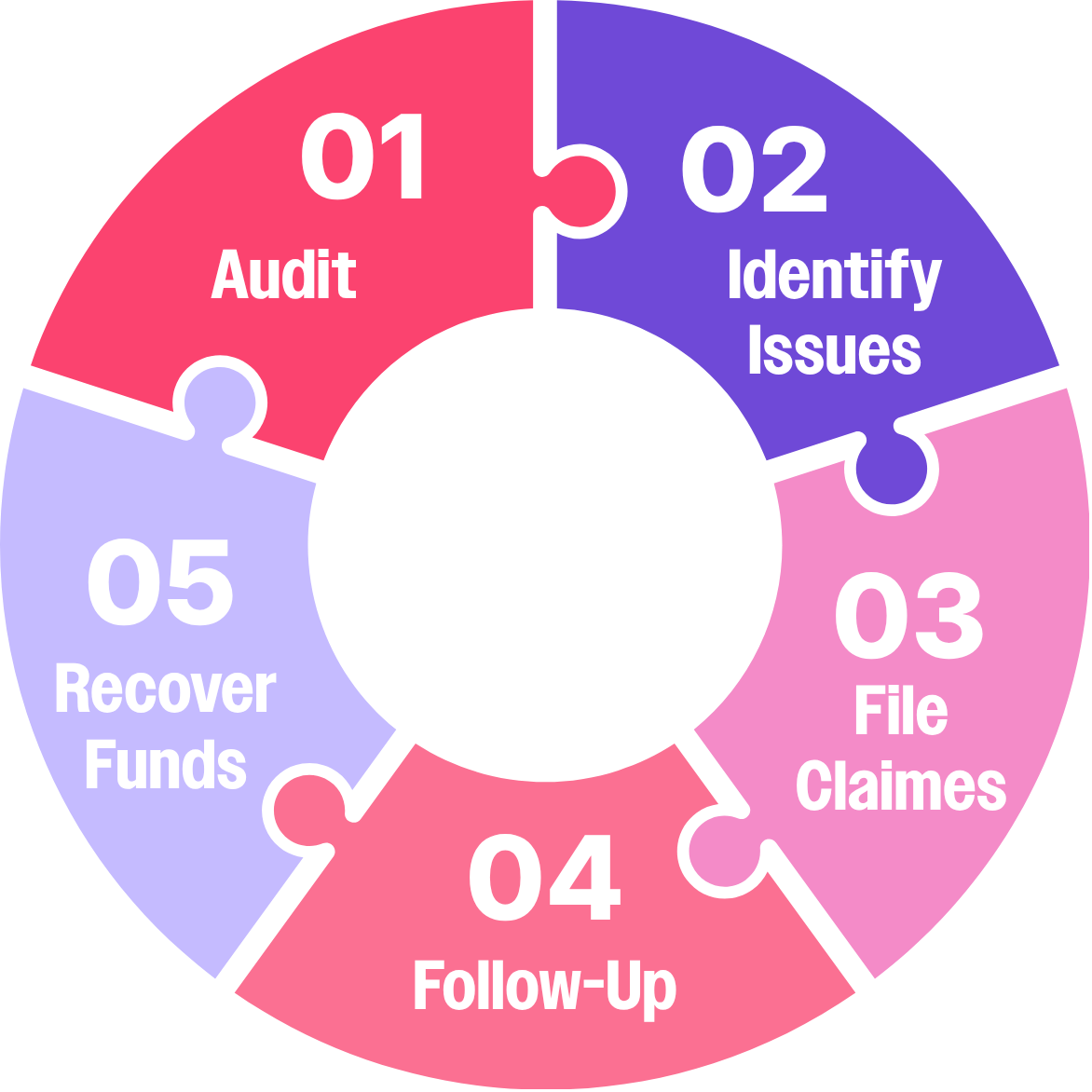
We start every new client with a full audit of their account. This is not a surface-level review. We run a deep scan across historical data, including inventory reports, order records, returns, and fee breakdowns. The goal is to uncover missed seller reimbursements that were never claimed. This includes lost inventory, return discrepancies, and incorrect charges that have gone unnoticed. Each issue is validated against Amazon’s data requirements so only legitimate, recoverable claims move forward.
Once opportunities are identified, we handle the entire claim
process. This includes preparing the required documentation,
submitting cases through Seller Central, and structuring each
claim to meet Amazon’s standards.
Claims are not
submitted in bulk without review. Each case is built with
supporting evidence to reduce rejection risk and speed up
resolution. We also manage all communication with Amazon, so
you are not dealing with back-and-forth responses or unclear
case outcomes.
Incorrect fees are isolated through detailed audits of your FBA charges. When discrepancies are found, claims are filed to recover overcharges and correct the issue going forward. If claims are denied, they are not abandoned. We review the reason for rejection, strengthen the documentation, and resubmit where valid. This ensures that recoverable funds are not lost due to incomplete submissions or initial denials.
Once opportunities are identified, we handle the entire claim
process. This includes preparing the required documentation,
submitting cases through Seller Central, and structuring each
claim to meet Amazon’s standards.
Claims are not
submitted in bulk without review. Each case is built with
supporting evidence to reduce rejection risk and speed up
resolution. We also manage all communication with Amazon, so
you are not dealing with back-and-forth responses or unclear
case outcomes.
Reimbursement is not a one-time process. New issues continue to appear as your account operates. We continuously monitor your account for new discrepancies, track all open cases, and follow up until each claim is resolved. If a valid claim is denied incorrectly, it is reopened and escalated when necessary. This ongoing process ensures consistent recovery and prevents funds from slipping through due to missed deadlines or lack of follow-up.
Handling reimbursements internally sounds manageable until you see how
often money is missed. Most sellers assume Amazon will automatically
correct errors or that basic checks are enough. In reality,
recoverable funds are left behind every month.
Amazon does
not proactively issue all seller reimbursements. Many errors sit in
reports without ever being flagged. If no claim is submitted, the
funds stay with Amazon. Claims are also time-sensitive. Each issue
type has a filing window, and once it expires, recovery is no longer
possible. Without consistent monitoring, these deadlines are missed
before the problem is even identified.
Rejections add
another layer. Claims submitted without the right data, formatting, or
supporting documentation are often denied. Most sellers stop at the
first rejection, even when the claim is valid. DIY reimbursement
typically breaks down in three areas: missed issues, missed deadlines,
and denied claims that are never reopened. A structured Amazon
reimbursement service avoids these gaps by identifying issues early,
submitting claims correctly, and following through until a resolution
is reached.
| DIY Approach | Managed Reimbursement Services |
|---|---|
| Sporadic manual reviews across multiple Seller Central reports | Continuous, systematic account monitoring across all case types |
| Missed cases due to unfamiliarity with Amazon reimbursement policies | Deep expertise in every eligible claim category and filing requirements |
| Incomplete or incorrect documentation leading to denied claims | Properly documented submissions with the right data for each case type |
| No follow-up system for open or escalated cases | Active case management with follow-up until each case is resolved |
| Deadlines missed on cases that expire without action | Deadline tracking ensures no eligible claim is left to expire |
Reimbursement is not about the number of cases filed. It is about the amount of money recovered back into your account. According to SPS Commerce, most sellers have between 1% and 3% of their revenue tied up in unresolved errors at any given time. Without a structured refund reimbursement process, that money remains unclaimed. We focus on converting identified issues into completed seller reimbursements that are paid out, not just submitted.
Lost InventoryUnits that go missing or are damaged inside fulfillment centers without proper compensation. Through validated claims under lost inventory reimbursement, the result is reimbursement for lost stock that would otherwise be written off as shrinkage, restoring revenue that was already earned but not paid out.
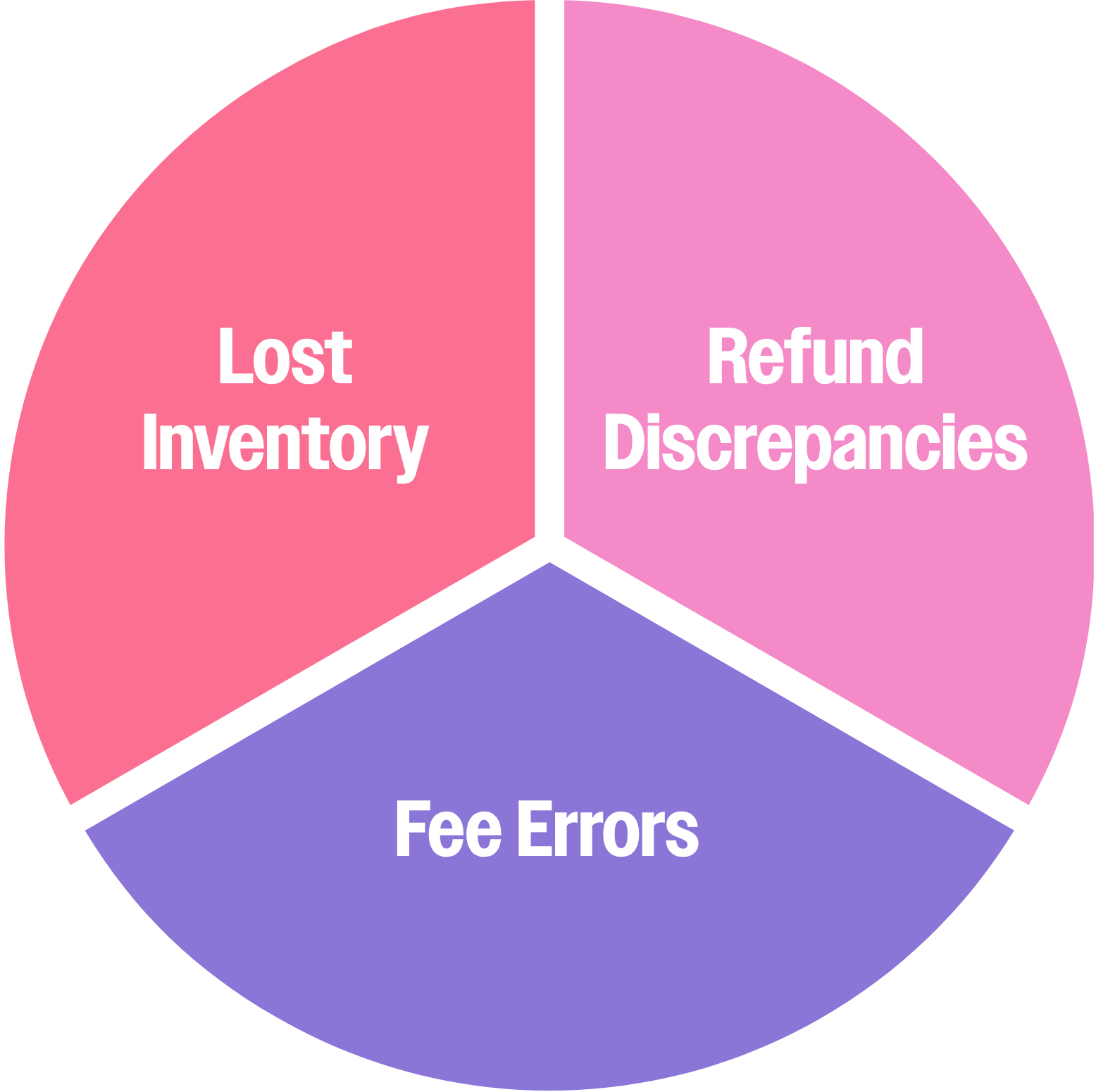
Refund DiscrepanciesOrders where customers were refunded but inventory was not returned or processed correctly. By correcting these mismatches, we recover the missing inventory value or secure reimbursement for the financial gap caused by incorrect return handling.
Fee ErrorsWhen Amazon applies incorrect measurements, weight tiers, or category classifications, sellers are overcharged on fees at scale. Through detailed audits, these discrepancies are identified and corrected, allowing sellers to recover overpaid fees and prevent continued margin erosion.
Each recovery is tied to a verified issue, backed by data, and tracked through to resolution so the result is measurable revenue returned to your business.
High-volume FBA sellers
When order volume increases, so do errors across inventory,
returns, and fees. Manual tracking breaks down at scale, and
missed seller reimbursements become unavoidable without a
structured process.
Established Amazon brands
Growth introduces complexity across multiple SKUs,
shipments, and fulfillment movements. As operations expand,
so does the risk of lost inventory and incorrect charges. A
dedicated FBA reimbursement service ensures revenue is not
lost while scaling.
Sellers experiencing consistent losses
Reimbursement requires consistent auditing, claim filing,
and follow-up. Without time to manage this daily, deadlines
are missed and valid claims go unsubmitted.

No. Amazon does not automatically reimburse all errors. Many issues, including lost inventory and fee overcharges, must be manually identified and claimed through the Amazon reimbursement process.
Common qualifying cases include lost or damaged inventory, unprocessed customer returns, and incorrect fee charges. These typically fall under lost inventory reimbursement, FBA refund reimbursement, and FBA fees refund categories.
Claim windows depend on the issue type, but most fall within a limited timeframe of a few months up to around 18 months. Amazon FBA refunds and return-related issues often have shorter deadlines. Once the window closes, the reimbursement is no longer eligible, even if the error is valid.
Yes, but it requires ongoing monitoring, detailed report analysis, and consistent claim management. Many sellers outsource this because missed issues and rejected claims are common without a structured process.
Find out what Amazon may owe you and where it’s coming from. We review your account activity, identify missed reimbursements, and estimate your recoverable amount based on actual discrepancies in inventory, returns, and fees.
No commitment required. You’ll see a clear breakdown of what is potentially recoverable before deciding to move forward.
Book Your Free Audit



